General Kitchen Rules at the
Monastery
- Wash and clean vegetables three times to
thoroughly remove dirt and insects. It’s a Buddhist tradition and a good
general practice.
- When pouring out hot water, lower the
temperature to lukewarm first to prevent burning yourself or other
sentient beings.
- When possible, limit your sampling of a dish
during cooking to no more than three times.
- Tell the Dharma Master or the responsible party
when you borrow an item from the kitchen.
- Unless invited to help yourself, always check
with the Dharma Master or responsible party before taking or consuming
items in the kitchen or refrigerator.
- When bringing items to the monastery as an
offering, let the Dharma Master know. Don’t simply leave it. This prevents
items from spoiling because no one knows about it.
- Whenever possible, borrow the public bowls and
utensils for your meals or bring your own and wash them when you are
finished. Limit using disposable products to reduce waste and help the
environment
- Do not bring expired or opened food items to the
monastery. Always bring food offering with a respectful mind. Think, would
you offer this to Buddha?
- When you bring food offerings to the monastery,
make sure that they do not contain alcohols, meat, seafood, any animal
ingredients (such as gelatin in the jelly, and rennet in the cheese),
garlic, onions, shallots, leeks and corianders. This will help maintain
the purity of the monastery, keep us mindful of our cultivation, and help
us fulfill our resolve and accumulate merits and blessings.
Kitchen Safety Tips
- Water, grease, and food scraps often fall on the
floor. They are slippery and can cause an accident. If you spill something
on the floor, clean it up immediately.
- Be aware of your surrounding in the kitchen and
pay close attention to hot stoves, ovens and electrical appliances. Don’t
be distracted.
- Keep things that can burn, such
as dish towels and plastics, away from the range top.
- Keep knives sharp so they cut with little force.
Dull knives require greater force. If you slip, you are at a greater
danger of hurting yourself.
- When you are working with a knife and wish to
lay it down, lay it on the cutting board with the sharp edge flat, facing
away from everyone. This way the knife is easy to see and people are less
likely to cut themselves while reaching for other items.
- For sanitation and general safety, keep your
work station and the kitchen area clean and uncluttered. Wash and put away
items in their rightful places as soon as you are finished with them.
- Routinely clean and wash all kitchen
instruments, counters, vents and the floor. Do not allow grease to build
up.
- Wear a mask, gloves and a head covering while
preparing food.
- Dispose of garbage promptly. At the monastery,
we recycle and separate food waste for compost.
Cutlery
At the monastery we mostly
use a Chinese cleaver. It is thinner in cross section than a western meat
cleaver and very versatile.
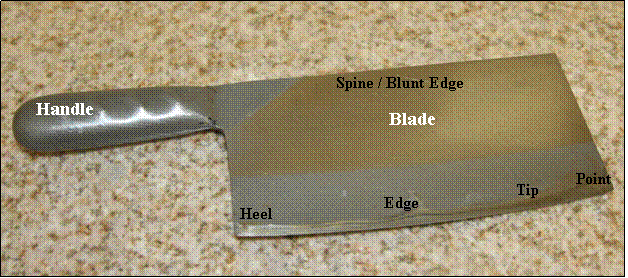
Point: The very end of the knife, which is used for piercing
Tip: The first third of the blade, which is used for
small or delicate work.
Edge: The cutting surface of the knife, which extends from
the point to the heel.
Heel: The rear part of the blade, used for cutting
activities that require more force, such as cutting through corn cobs.
Spine: Push here to exert more
force such as when cutting a pumpkin.
Knife Technique
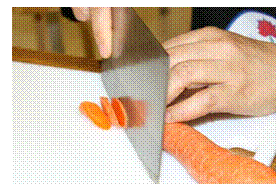
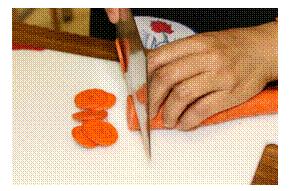
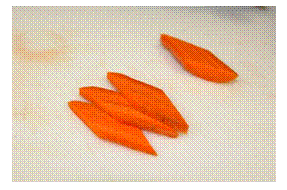
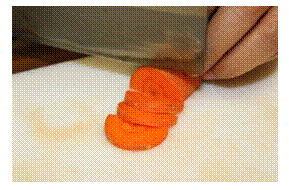
SLICING: Holding
the food and cleaver firmly, cut straight down, using the knuckles of your free
hand as a guide. Below are different slicing techniques: angled, straight,
diamond and half moon.
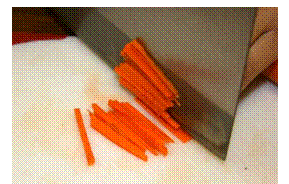
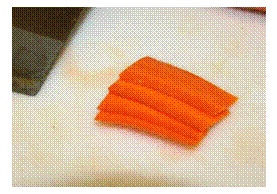
JULIENNE: Stack
a few slices, and use the slicing technique, cutting straight down through the
stack to create sticks. For matchstick julienne, start with 1/8-inch slices,
and cut them into 1/8-inch sticks.
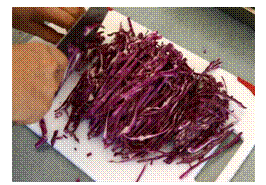 SHREDDING: Slicing herbs and leafy vegetables into long, thin
strips. This method is especially useful for cooking tougher greens which can
be hard to chew when left in bigger pieces. To shred a
cabbage for coleslaw, cut a cleaned, washed head into quarters, remove the hard
core, then thinly slice the quarters across the grain.
SHREDDING: Slicing herbs and leafy vegetables into long, thin
strips. This method is especially useful for cooking tougher greens which can
be hard to chew when left in bigger pieces. To shred a
cabbage for coleslaw, cut a cleaned, washed head into quarters, remove the hard
core, then thinly slice the quarters across the grain.
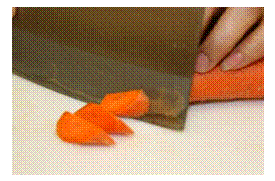 ROLL CUTTING: This technique is used for long vegetables, like carrots or zucchini.
It makes attractive chunks and exposes more of the surface area of the
vegetable. Hold the blade perpendicular to the board and cut straight down on
the diagonal. Then roll the vegetable a quarter-turn, and cut straight down
again at the same diagonal angle. Continue rolling and cutting in this way all
along the length of the vegetable.
ROLL CUTTING: This technique is used for long vegetables, like carrots or zucchini.
It makes attractive chunks and exposes more of the surface area of the
vegetable. Hold the blade perpendicular to the board and cut straight down on
the diagonal. Then roll the vegetable a quarter-turn, and cut straight down
again at the same diagonal angle. Continue rolling and cutting in this way all
along the length of the vegetable.
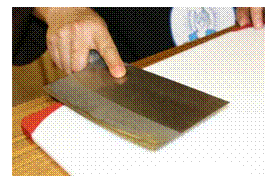
CRUSHING:
To crush ginger, place it near the edge of the cutting board, lay the knife
blade flat over it with the blade facing away from you, and with the heel of
your free hand, give the side of the blade a good whack, being careful to avoid
the edge of the blade.
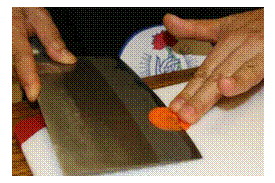
PARALLEL CUTTING: Lay the food close to the edge of the board with the fingers of your
free hand flat on top of it. Angle the
Chinese chef’s knife so that it’s almost parallel to the board, slanting
slightly downward. Move it slowly and carefully back and forth to slice the
food, paying close attention to avoid cutting your fingers.
DICING: Line sticks up perpendicular to the blade, and slice
straight down across them, creating cubes.
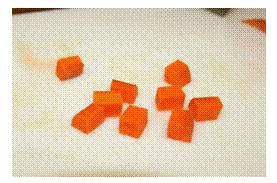
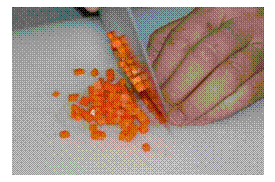
BRUNOISE: Is to create very fine, confetti-like pieces. Stack the panels or lay them out, then
cut them lengthwise into very thin julienne. Remember to keep your fingers
tucked in, and out of the knife's path. Finally, turn the julienne and chop
them into a beautiful brunoise.
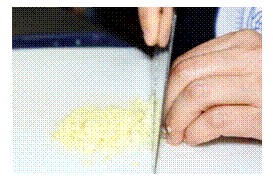
MINCING: Start by cutting the ingredient into thin strips,
and then dice the strips. Using the tip as a pivot, raise and lower the blade
in a chopping motion, moving it from side to side to mince everything evenly.
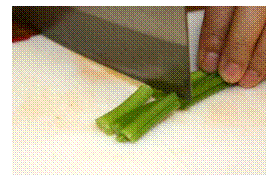
CHOP: Means to cut foods into pieces. This is a
larger cut than dice. With a rocking motion, keeping the tip of the knife on
the chopping board, slice down through the vegetable at regular intervals,
using the full length of the knife.
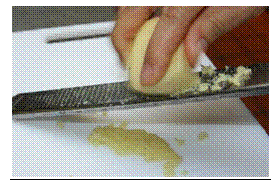 GRATE:
Grate food into fine crumbs or other sizes depending upon your grater.
GRATE:
Grate food into fine crumbs or other sizes depending upon your grater.
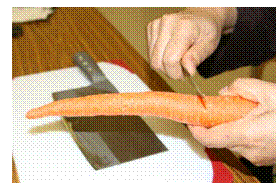
SHAVING:
Different from peeling, shaving only removes a thin layer of the outer skin.
This is a preferred technique for certain vegetables such as gobo.
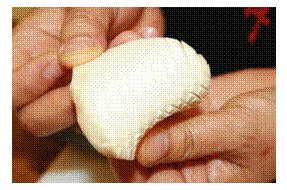
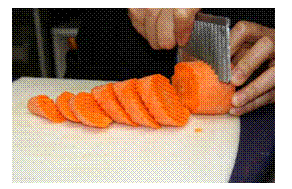
FLOWER CUT:
Includes using special tools and scoring techniques to create unique patterns. This
creates fun, creative and beautiful dishes.
Cooking Tips
- Cut your items to consistent sizes so they not
only look attractive on the plate but also will cook evenly.
- Always slice through. Do not cut part of the way
where pieces remain stuck together.
- Don’t waste food; change your cutting direction
or technique so all ingredients are used. Save your scraps for other
purposes such as a soup base or for another dish.
- When you cut against the grain, food tends to be
tender. When you cut along the grain, food tends to be tougher.
Nevertheless, you may occasionally need to cut along the grain because it
is unavoidable or you wish to display a pretty pattern.
- In a dish there should always be more of the main
ingredient than the secondary ingredients.
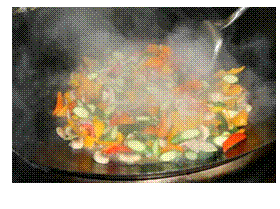
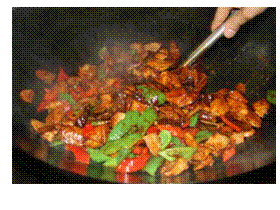
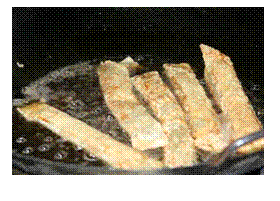
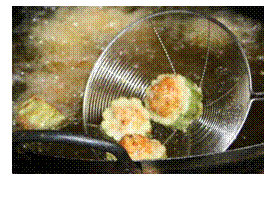
- For crisp food such as crunchy vegetables, use
high heat and cook fast. Stir fry and deep fry are used for this purpose.
- To tenderize, use medium to low heat and allow
the ingredients to cook a longer time. Simmering, roasting, stewing, and
braising are used for this purpose.
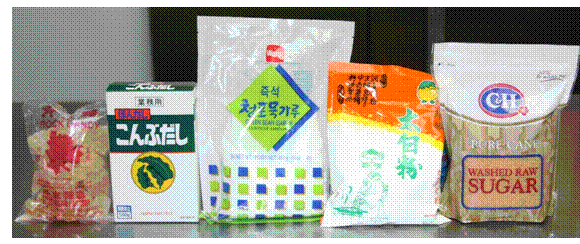
Basic Seasonings
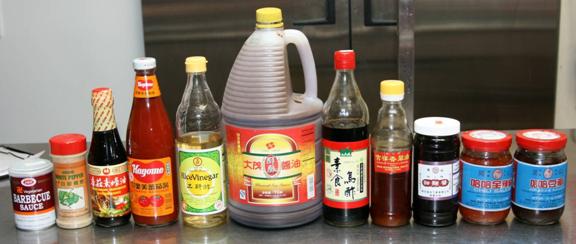
From left to right